Unconscious mind: the quiet power behind daily life
Your unconscious mind is working 24/7 — taking in huge amounts of information, filing memories, noticing patterns, and quietly nudging your emotions and behaviour. When I began my NLP journey, I realised many of my reactions weren’t “just who I am”; they were the result of unconscious filtering. That realisation felt like opening a window — more light, more choice, more ease.
We often try to “think” our way into change with the conscious mind alone. But it’s the unconscious that does most of the heavy lifting. When you learn how it operates — and how to work with it kindly — life starts to feel simpler. You don’t have to push; you can guide.
Unconscious mind & Freud’s iceberg (gentle look)
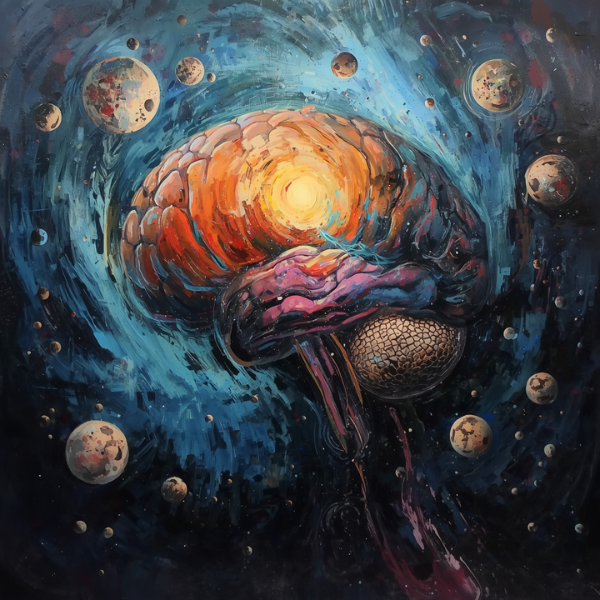
Freud described the mind as an iceberg. The conscious mind is the tip above the waterline — your awareness right now. Just below sits the preconscious — a mental “waiting room” holding what’s ready to come into awareness. Beneath the surface is the vast unconscious mind: stored memories, feelings, beliefs, urges, habits and automatic programmes. Most activity happens out of sight, yet it steers the ship.
Why the unconscious mind quietly runs the show
Your conscious mind is brilliant at focusing and labelling, but it’s limited in capacity. Meanwhile, the unconscious mind processes a torrent of sensory data and personal history, then presents a filtered version of reality — your “map of the world” — to conscious awareness. That map shapes how you feel emotionally and physically, and what you do next. If the map isn’t helping, you can update it.

Unconscious mind filters in NLP — three core shortcuts
To cope with the sheer volume of input, your unconscious uses three shortcuts before handing things to awareness:
- Deletion — ignoring what it deems irrelevant in the moment. Useful, but it can hide helpful evidence.
- Distortion — reshaping input to match expectations.
- Generalisation — learning from one event and applying a rule broadly.
Unconscious mind distortion: the rope‑snake story
Picture a man walking warily through dense jungle. He knows snakes here are dangerous. Up ahead, thirty feet away, he freezes — heart pounding. A thick, dark coil lies across the path. His body locks: run, distract, or capture? A bird shrieks from a nearby tree; he glances left, then back. The “snake” hasn’t moved. He takes one slow step closer… and realises it has never been alive. It’s a coil of rope.
Nothing in the world changed in those few seconds — only his perception did. That is distortion in the unconscious mind: we reshape incoming data to fit expectations, fears or hopes. In everyday life, we do the same with emails, glances, tones of voice and memories — and our state follows what we think we saw.
Unconscious mind generalisation: when one moment becomes a rule
Maybe you’ve blanked once while presenting and, another time, got feedback that your talk ran long. It’s easy for the unconscious to protect you by creating a rule: “I’m always bad at presenting.” That rule is efficient — but rarely accurate. Updating it to “Sometimes I over‑explain when I’m nervous; I can prepare one clear story and a two‑minute summary” changes your state and behaviour.
Deletion, distortion and generalisation help you function — and sometimes they hold you back. The skill is noticing which one is running, then choosing a kinder, more accurate update.
What shapes unconscious mind filters? Values, beliefs, decisions, memories
Values act as evaluation filters — what matters most rises to the top (respect, honesty, belonging). Beliefs about self, others and the world form from repeated messages and experiences; some empower, some constrain. Past decisions and memories bias what you notice now. Your inner language (self‑talk) also trains the unconscious mind what to look for next. In NLP, Meta Programs describe higher‑level patterns that steer attention and behaviour — and because they’re processes, they can change.

You can’t change the past — you can change the meaning now
We cannot change what has happened. We can soften the emotional hold by updating how an event is stored and what it means in the present. With hindsight, you can extract learning, release old charge, and create a more helpful future expectation. When the meaning shifts, your state and choices shift too.
Small, kind steps to update unhelpful filters
- Name the filter. Ask, “Did I delete something important? Distort based on fear? Generalise from one moment?”
- Add missing data. What else could be true? What evidence supports a kinder interpretation?
- Update language. Replace “always/never” with specific, present‑tense statements that are true and kind.
- Test and learn. Take a tiny action consistent with the new meaning and notice how your state shifts.

Further reading (outbound)
For a neutral overview, see Unconscious mind.
Related reading